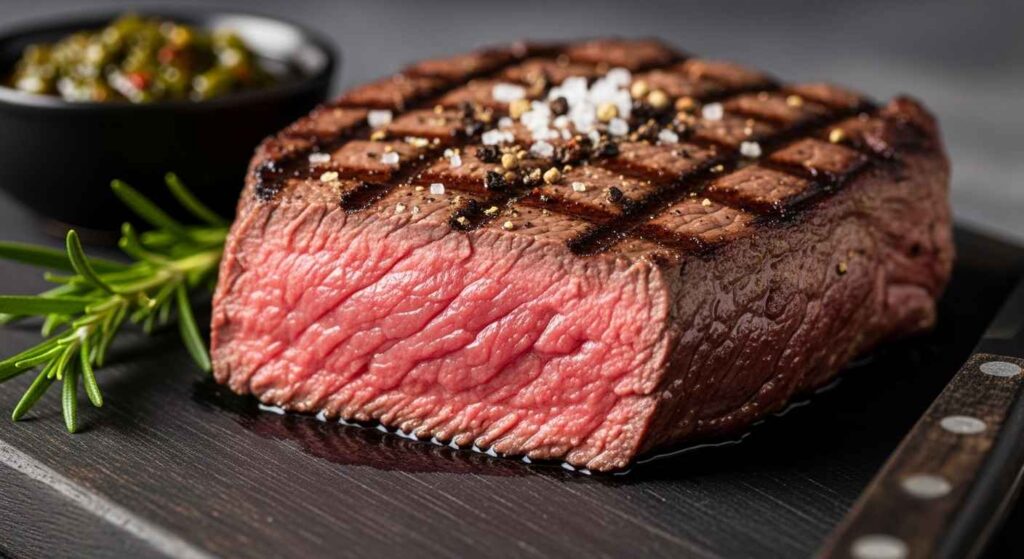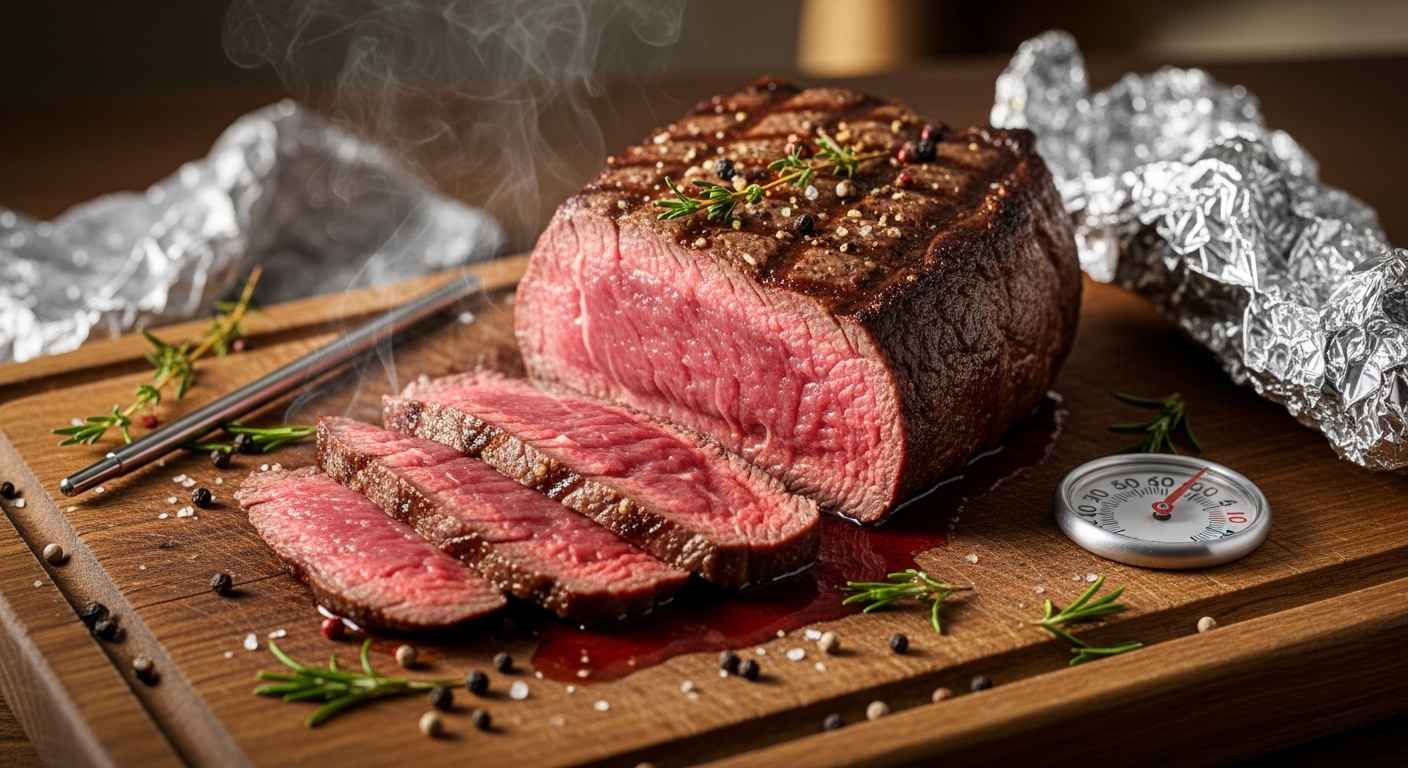
Last week, I watched my neighbor slice into a beautiful ribeye steak straight off the grill. The juices immediately poured out onto his cutting board, leaving him with a disappointing, dry piece of meat. This common mistake happens because most home cooks skip one simple but crucial step: resting meat after cooking.
Resting meat isn’t just chef wisdom passed down through generations. It’s backed by solid food science that can transform your cooking results from good to restaurant-quality.
What Happens When You Rest Meat After Cooking
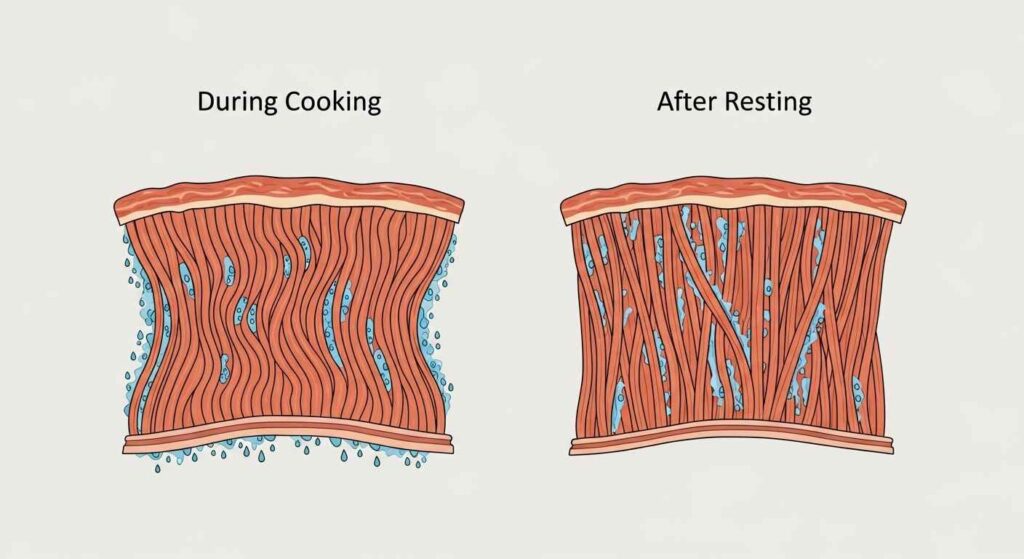
When meat cooks, muscle fibers contract and squeeze out moisture. During the resting period, these fibers relax and reabsorb the juices that were pushed out during cooking. Think of it like a wet sponge being squeezed and then allowed to expand again.
Here’s the science: Heat causes proteins in muscle fibers to coil up and contract. This contraction pushes moisture toward the center of the meat. As the temperature cools during resting, muscle proteins begin to relax, reducing pressure in the center and allowing juices to redistribute throughout the meat.
The Temperature Factor
Your meat continues cooking even after you remove it from heat, with temperatures potentially rising up to 13 degrees during the resting period. This carryover cooking happens because heat travels from the hot exterior to the cooler interior.
How Long Should You Rest Different Types of Meat
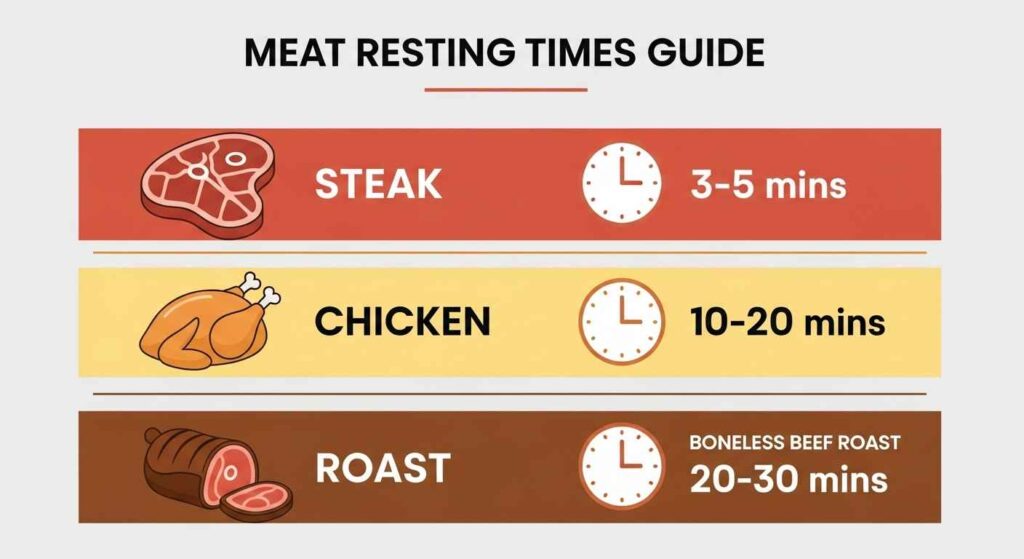
The resting time depends on the size and thickness of your cut. Many chefs follow the rule of one minute resting time for every 100g of meat.
Quick Reference Guide:
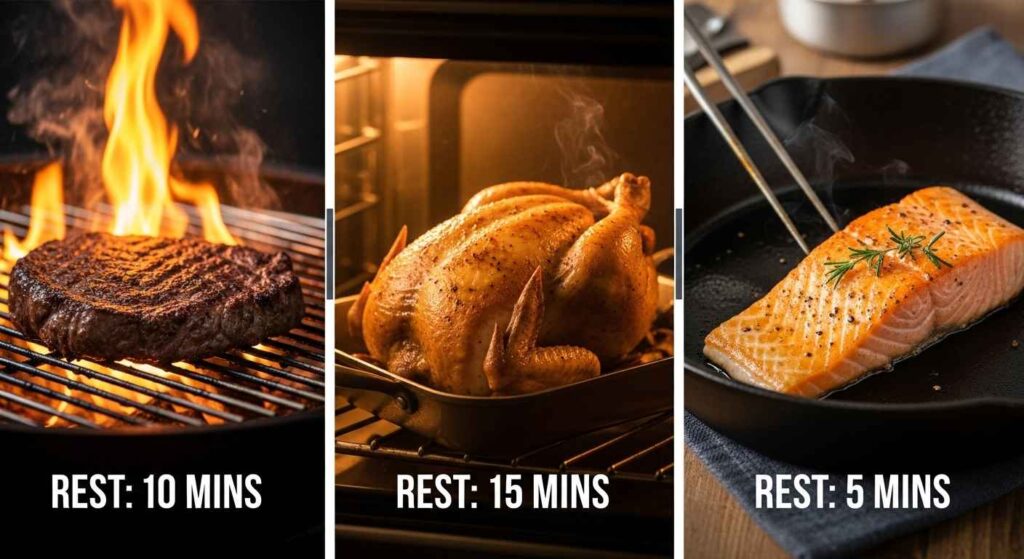
Small Cuts (5-10 minutes):
- Steaks (any thickness)
- Chicken breasts
- Pork chops
- Fish fillets
Medium Roasts (15-20 minutes):
- Beef tenderloin
- Pork tenderloin
- Whole chicken
- Duck breast
Large Roasts (30-60 minutes):
- Prime rib
- Whole turkey
- Leg of lamb
- Pork shoulder
A general rule: let your meat rest for half the amount of time you cooked it. So if you grilled a steak for 8 minutes, rest it for 4 minutes.
The Right Way to Rest Meat
Step-by-Step Resting Method:
- Remove from heat source when internal temperature is 5-10 degrees below your target
- Place on cutting board or serving platter
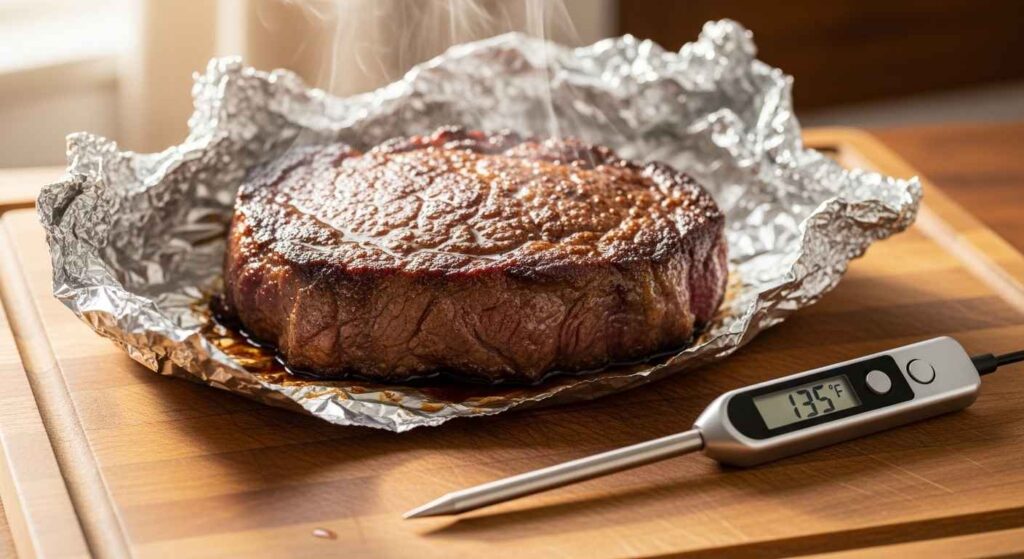
- Tent loosely with foil (optional – keeps meat warmer but may soften crispy exterior)
- Set timer based on meat size
- Check internal temperature – it should reach your target during rest
- Slice and serve immediately after resting period
Temperature Safety Considerations
Cooked meat should never sit out for more than two hours, as temperatures between 40-140°F create ideal conditions for bacteria growth. This isn’t typically a concern during normal resting periods, but keep it in mind for longer rests.
Common Meat Resting Mistakes to Avoid
Mistake 1: Skipping the Rest Entirely
This is the biggest error. You lose up to 40% of your meat’s juices by cutting immediately.
Mistake 2: Wrapping Too Tightly
Tight foil wrapping steams the meat and softens any crispy exterior you worked hard to achieve.
Mistake 3: Resting in a Cold Environment
Don’t rest meat in a drafty area or near air conditioning. Room temperature is perfect.
Mistake 4: Not Accounting for Carryover Cooking
Always remove meat 5-10 degrees before your target temperature to prevent overcooking.
What About Different Cooking Methods?
Grilled Meat
Grilled meats benefit most from resting because high heat creates more muscle fiber contraction.
Slow-Cooked Meat
Large cuts like brisket and pork shoulder can rest for 2-4 hours, wrapped in towels and placed in a cooler. This extended rest continues the tenderizing process.
Pan-Seared Meat
Even quick-cooked steaks need a 5-minute rest to redistribute juices properly.
The Science Behind Juiciness
When you bite into properly rested meat, you’re experiencing the result of moisture redistribution. Rested meat holds onto more of its natural juices instead of losing them to the cutting board. This retention directly affects our perception of tenderness and flavor.
The proteins that dissolved during cooking help trap these redistributed juices, creating that satisfying, succulent texture we associate with perfectly cooked meat.
Tips for Keeping Rested Meat Warm
For Individual Portions:
- Rest in a warm (200°F) turned-off oven
- Use a warming drawer if available
- Place on a preheated serving plate
For Large Roasts:
- Wrap in towels after foil tenting
- Place in an insulated cooler (without ice)
- Use a low-temperature warming oven (170-200°F)
Why Some Chefs Debate Resting
Some culinary experts question whether resting is always necessary, particularly for meats cooked to higher temperatures. However, the majority of cooking science supports resting for most applications, especially when you want maximum juiciness and flavor retention.
The debate often centers around serving temperature versus juice retention. While resting does allow some cooling, the trade-off for better moisture retention is usually worth it.
When you’re ready to put your meat-resting knowledge to work, try these tested recipes from our kitchen:
- Perfect your technique with our Quick 30-Minute Butter Chicken Recipe – ideal for practicing proper resting on chicken
- Master steak resting with our One Pan Lemon Herb Chicken Dinner technique
- Apply these principles to our Easy Slow Cooker Beef Stew for maximum tenderness
Understanding food science can transform your cooking. Learn more about temperature control in our guide to Best Frying Temperature for Crispy Chicken.
Frequently Asked Questions
Does resting meat really make a difference?
Yes. Properly rested meat retains significantly more moisture than meat cut immediately after cooking. The difference is noticeable in both texture and flavor.
Can you rest meat too long?
For small cuts, resting beyond 15 minutes may result in cool meat. Large roasts can rest safely for up to an hour when properly managed.
Should you rest meat in foil?
Loose foil tenting helps retain heat but isn’t necessary. Avoid tight wrapping, which can steam away crispy exteriors.
What temperature should meat be when you start resting?
Remove meat when it’s 5-10 degrees below your target internal temperature. Carryover cooking will bring it to the perfect doneness.
Conclusion: Better Results Through Patience
Resting meat after cooking is one of the simplest ways to improve your cooking results dramatically. This single technique can turn a potentially dry, disappointing meal into restaurant-quality results at home.
The science is clear: muscle fibers need time to relax and reabsorb their natural juices. Whether you’re grilling a weeknight steak or roasting a holiday turkey, those few minutes of patience will reward you with noticeably better texture, flavor, and overall eating experience.
Start incorporating proper resting into your cooking routine, and you’ll wonder how you ever served meat any other way. Your family and guests will certainly taste the difference.