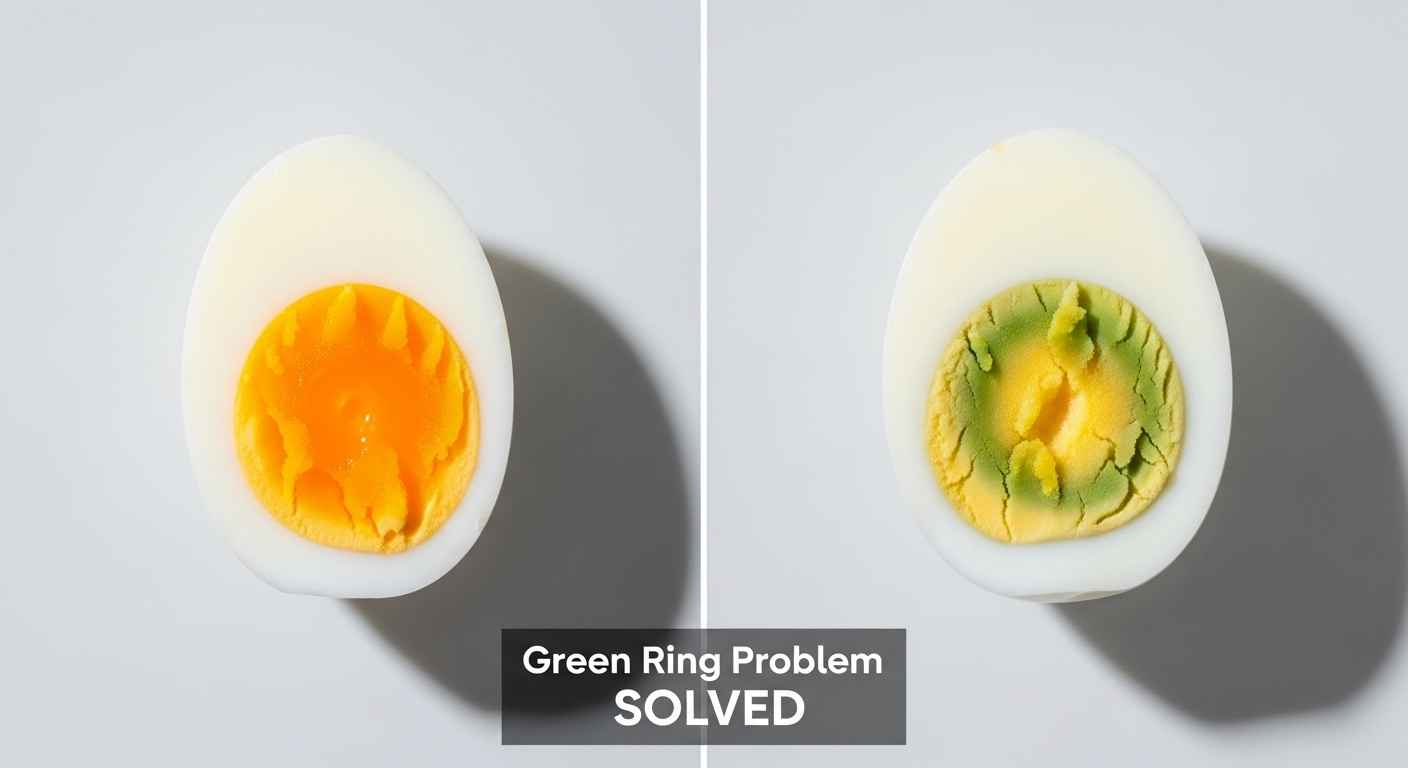
Have you ever cracked open a hard-boiled egg only to find an ugly green ring around the yolk? Don’t panic. This common kitchen mishap happens to the best of us. The green color looks alarming, but it’s actually harmless and completely safe to eat.
I remember the first time I saw this happen in my own kitchen. I was making deviled eggs for a family gathering and was horrified when I peeled the eggs to find that telltale green ring. I thought I had ruined the entire batch! After some research, I learned it’s just a simple chemistry lesson gone wrong in the kitchen.
What Causes Eggs to Turn Green When Boiled?
The green ring around your egg yolk is the result of a chemical reaction between two naturally occurring elements in eggs. When eggs are cooked for too long or at too high temperatures, sulfur from the egg whites combines with iron from the egg yolks to form ferrous sulfide.
This compound creates that greenish-gray ring you see around the yolk. The color is actually black, but appears green because it forms a very thin layer over the orange yolk.
The Chemistry Behind Green Eggs
Here’s what happens inside your egg during cooking:
- Egg whites contain sulfur compounds
- Egg yolks contain iron
- Heat breaks down proteins and releases these elements
- Sulfur and iron react to form ferrous sulfide
- This compound appears as a green or gray ring
The reaction intensifies with:
- Higher cooking temperatures
- Longer cooking times
- High iron content in your cooking water
Are Green Eggs Safe to Eat?
Yes, eggs with green rings are completely safe to eat. The green ring is harmless and safe to eat. The discoloration is harmless and won’t make you sick or affect the egg’s nutritional value.
The green color doesn’t change the taste significantly, though some people notice a slightly sulfuric smell or metallic taste. This is purely cosmetic and poses no health risks.
When Green Eggs Might Be Unsafe
The only time to worry about green coloration in eggs is if:
- The entire egg white is green (not just around the yolk)
- The egg has an off smell beyond the typical sulfur scent
- The egg appears slimy or has other signs of spoilage
These could indicate bacterial contamination rather than the harmless chemical reaction we’re discussing.
How to Prevent Eggs from Turning Green
The good news is that preventing green eggs is simple. Follow these proven methods to get perfect hard-boiled eggs every time.
The Perfect Hard-Boiled Egg Method
Prep Time: 2 minutes
Cook Time: 15 minutes
Total Time: 17 minutes
Servings: 6 eggs
Ingredients:
- 6 large eggs
- Cold water (enough to cover eggs by 1 inch)
- Ice water for cooling
Step-by-Step Instructions:
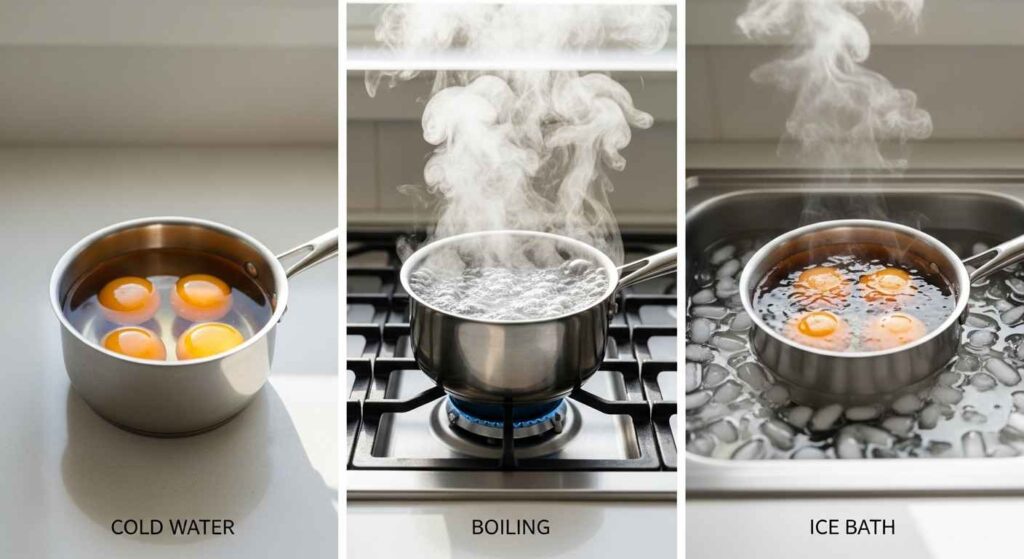
- Place eggs in a single layer in a saucepan
- Cover with cold tap water by at least 1 inch
- Cover the pan and bring water to a rolling boil
- Turn off heat immediately when water boils
- Let eggs stand in hot water for 15 minutes (12 minutes for medium eggs, 18 minutes for extra large)
- Drain hot water immediately
- Transfer eggs to ice water bath for 2-3 minutes
- Peel when cool enough to handle
Temperature and Time Guidelines
Cooking Times by Egg Size:
- Medium eggs: 12 minutes
- Large eggs: 15 minutes
- Extra large eggs: 18 minutes
Key Temperature Tips:
- Start with cold water
- Remove from heat immediately when boiling starts
- Use an ice bath to stop cooking quickly
Why This Method Works
This gentle cooking method prevents the high temperatures that cause the sulfur-iron reaction. The ice bath stops the cooking process instantly, preventing overcooking from residual heat.
Common Mistakes That Cause Green Eggs
Avoid these cooking errors to prevent green rings:
Mistake #1: Starting with Hot Water
Never add eggs to already boiling water. This creates temperature shock and uneven cooking.
Mistake #2: Cooking Too Long
Extended cooking times guarantee green rings. Stick to the recommended times based on egg size.
Mistake #3: Keeping Eggs in Hot Water
Leaving eggs in hot water after cooking continues the cooking process, even with heat turned off.
Mistake #4: Skipping the Ice Bath
Without rapid cooling, eggs continue cooking from residual heat, leading to overcooking.
Mistake #5: Using High Heat
Rapid, vigorous boiling creates higher temperatures that promote the sulfur-iron reaction.
Different Types of Green Coloration in Eggs
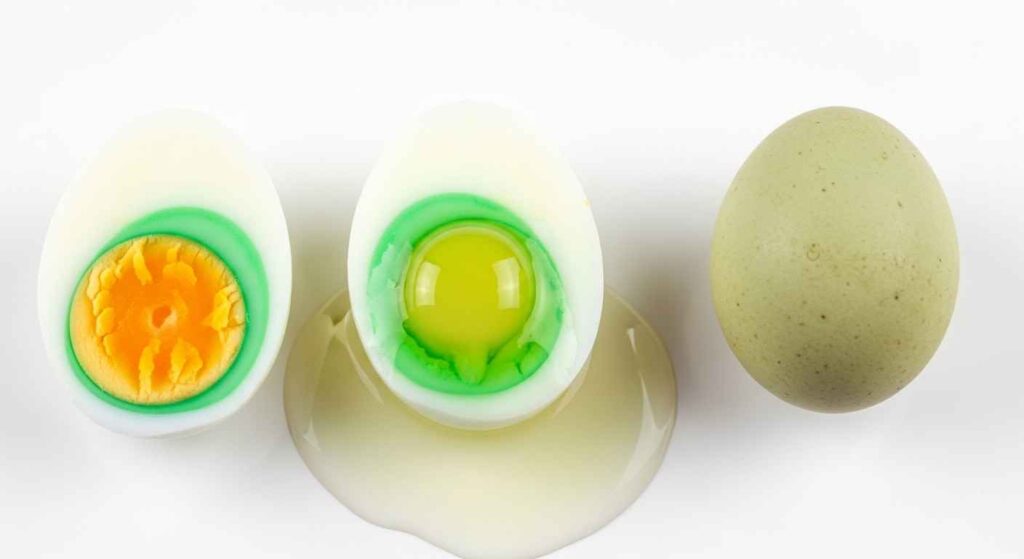
Not all green coloration in eggs comes from overcooking. Here are the different types you might encounter:
Green Ring Around Yolk
- Cause: Overcooking or high heat
- Appearance: Gray-green ring between yolk and white
- Safety: Completely safe to eat
Green Egg Whites
- Cause: High vitamin B12 content in the egg
- Appearance: Slightly greenish tint to raw or cooked whites
- Safety: Safe and actually indicates higher nutritional value
Green Shell Color
- Cause: Chicken breed genetics
- Appearance: Natural green or blue-green eggshells
- Safety: Completely normal and safe
Tips for Perfect Hard-Boiled Eggs Every Time
Age Matters
Use eggs that are at least one week old. Fresh eggs are harder to peel and more likely to stick to the shell.
Water Quality
If your tap water has high iron content, consider using filtered water to reduce the chance of green rings.
Storage Tips
- Store hard-boiled eggs in the refrigerator
- Use within one week of cooking
- Keep shells on until ready to eat for best freshness
Peeling Tricks
- Start peeling from the larger end where the air pocket is
- Peel under cool running water
- Remove the membrane along with the shell
Troubleshooting Green Eggs
If Your Eggs Still Turn Green
Try these adjustments:
- Reduce cooking time by 1-2 minutes
- Use a larger pot to prevent crowding
- Check your water’s iron content
- Ensure rapid cooling with ice bath
Testing Your Method
Cook just one or two eggs first to test your timing and method before cooking a large batch.
Storage and Make-Ahead Tips
Proper Storage
- Refrigerate hard-boiled eggs within 2 hours of cooking
- Store in original carton or covered container
- Label with cooking date
Make-Ahead Options
Hard-boiled eggs can be prepared up to one week in advance. They’re perfect for:
- Meal prep
- Quick breakfast additions
- Snack preparation
- Salad toppings
For other make-ahead breakfast ideas, try our make-ahead breakfast burritos recipe or fluffy scrambled eggs with cheese recipe.
Serving Suggestions
Ways to Use Perfect Hard-Boiled Eggs
- Deviled eggs for parties
- Egg salad sandwiches
- Chopped in salads like our creamy potato salad
- Sliced on avocado toast
- Added to breakfast bowls
Seasoning Ideas
- Simple salt and pepper
- Everything bagel seasoning
- Paprika and herbs
- Hot sauce or sriracha
Frequently Asked Questions
Can I eat eggs with green rings?
Yes, eggs with green rings are completely safe to eat. The color comes from a harmless chemical reaction.
Why do my scrambled eggs turn green?
Scrambled eggs can turn green from the same sulfur-iron reaction, usually from cooking at too high heat or for too long.
Do green eggs taste different?
You might notice a slightly metallic or sulfuric taste, but it’s usually very mild.
Can I prevent green rings completely?
Yes, by following proper cooking techniques with controlled temperature and timing.
The Science Behind Perfect Eggs
Understanding the chemistry helps you become a better cook. The key is controlling heat to avoid breaking down proteins too aggressively while still cooking the egg thoroughly.
When you master this technique, you’ll never have to worry about green eggs again. Your deviled eggs will look perfect, your egg salad will be appetizing, and you’ll feel confident serving hard-boiled eggs to family and friends.
Conclusion
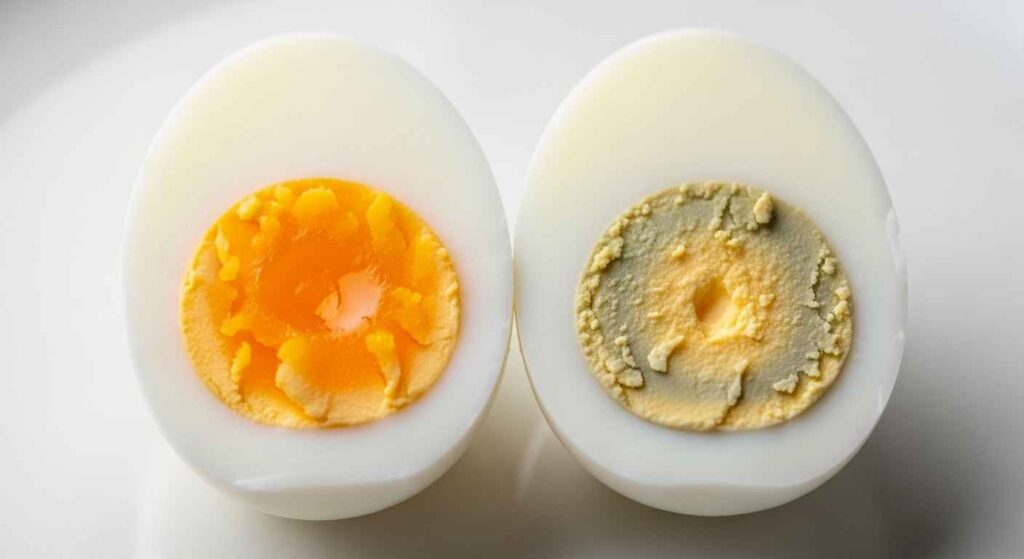
Green rings around egg yolks are a common cooking mishap that happens when eggs are overcooked or cooked at too high temperatures. The good news is they’re completely harmless and easy to prevent.
By starting with cold water, removing eggs from heat immediately when water boils, timing carefully based on egg size, and cooling quickly in an ice bath, you’ll get perfect hard-boiled eggs every time.
Remember, cooking is all about understanding the science behind what happens in your kitchen. Once you know why eggs turn green, you have the knowledge to prevent it from happening again.
For more egg cooking techniques, check out our fluffy pancake recipe that uses eggs perfectly, or try our homemade hash browns recipe for a complete breakfast spread.