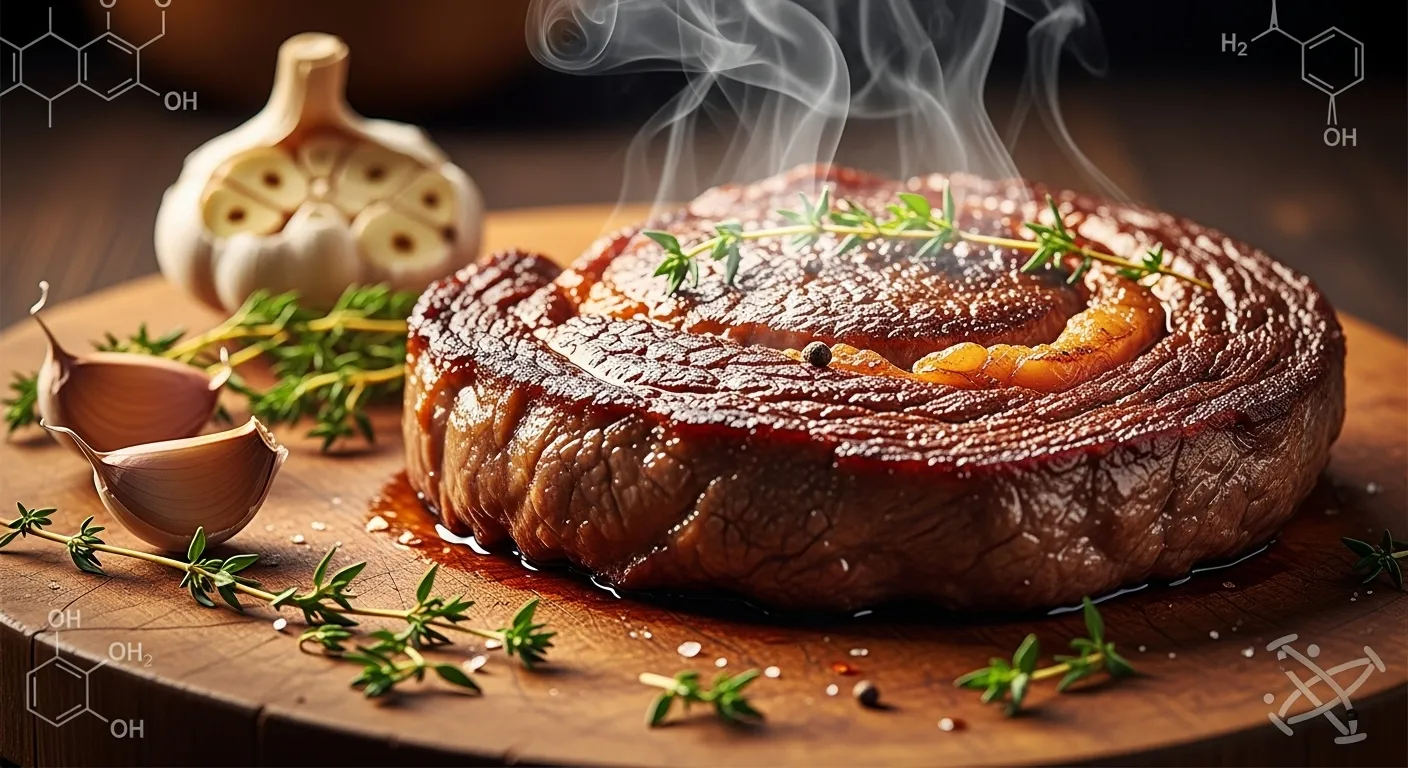
The Maillard reaction happens when heat makes amino acids and sugars in food react. This creates brown colors and rich flavors. It turns plain ingredients into tasty meals. You see it in seared meat or toasted bread.
I remember my first steak. I cooked it low and slow. It came out gray and bland. Then I tried high heat. The outside browned. The smell filled the kitchen. That changed how I cook.
What Is the Maillard Reaction?
Louis Camille Maillard found this reaction in 1912. It is non-enzymatic browning. Heat causes it between amino acids from proteins and reducing sugars. This makes new compounds. They give food its brown look and deep taste.
John E. Hodge explained the steps in 1953. The reaction needs temperatures from 140°C to 165°C. That is 280°F to 330°F. Many recipes use this heat level.
How Does the Maillard Reaction Work?
It starts with a sugar’s carbonyl group. This reacts with an amino acid’s amino group. They form a glycosylamine and water. The glycosylamine changes through Amadori rearrangement. This makes ketosamines.
Ketosamines break down further. They create short-chain compounds. These include diacetyl and pyruvaldehyde. Brown polymers called melanoidins form too. They cause the color. Hundreds of flavor compounds appear. Each food type makes different ones.
The reaction speeds up in alkaline settings. Amino groups lose protons easier. This boosts their reactivity.
Key Factors for the Reaction
- Heat: Needs high temperatures. Below 140°C, it slows.
- Moisture: Low water helps. Dry the food surface first. Water boils at 100°C. It blocks higher heat.
- Time: Longer exposure builds flavors. But too long burns food.
- pH Level: Higher pH speeds it. Add baking soda for faster browning.
- Sugars and Proteins: Reducing sugars like glucose work best. All proteins have amino acids.
Pat meat dry before cooking. Salt it early or right before. This aids browning.
Maillard Reaction vs. Caramelization
People mix these up. Both brown food. But they differ.
The Maillard reaction uses amino acids and sugars. It makes savory flavors.
Caramelization uses sugars alone. Heat breaks them down. It starts at higher temperatures. Around 170°C or 340°F. It gives sweet notes. Like in caramel candy.
Some foods do both. Onions brown from Maillard and caramelize.
Common Questions About the Maillard Reaction
What temperature starts it? Around 140°C.
Does it make harmful compounds? Yes, acrylamide at high heat. This may cause cancer. Cook at lower heat to reduce it.
Why dry food before cooking? Water keeps temperatures low. Dry surfaces heat faster.
What foods show it best? Seared steaks, roasted coffee, fried onions, baked bread.
How to get more browning? Use high heat. Dry the surface. Add sugar or milk for extra sugars.
Examples in Everyday Cooking
You see the Maillard reaction in many dishes. It browns chicken in easy chicken alfredo. It adds depth to sauce in authentic Italian pasta sauce. Brownies get their crust from it in easy fudgy brownies from scratch.
It works in vegetarian options too. Like in spicy black bean burgers. Or garlic roasted broccoli and cauliflower.
For more science, check why salt makes food taste better or what is umami.
External link: For details on the mechanism, see this Wikipedia page.
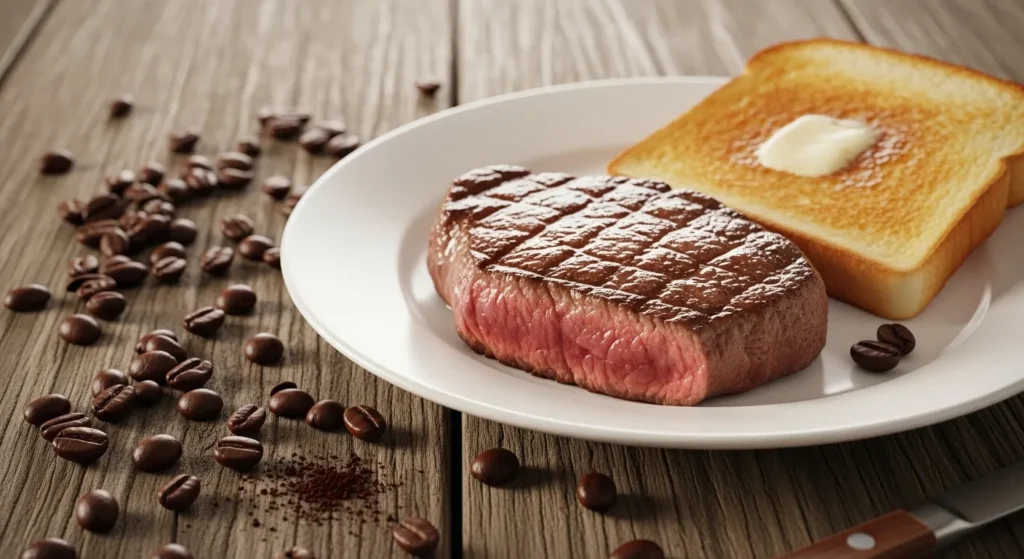
Quick Seared Steak Recipe: See the Maillard Reaction in Action
This recipe shows the reaction. High heat browns the outside. It serves tender steak with rich flavor.
Prep time: 10 minutes
Cook time: 6 minutes
Total time: 16 minutes
Servings: 2
Ingredients
- 2 ribeye steaks (8 ounces each)
- 1 teaspoon salt
- 1/2 teaspoon black pepper
- 1 tablespoon vegetable oil
- 2 tablespoons butter
- 2 garlic cloves, smashed
- 2 sprigs fresh thyme
Instructions
- Take steaks out of fridge. Let them sit 30 minutes to reach room temperature.
- Pat steaks dry with paper towels. This helps browning.
- Season both sides with salt and pepper.
- Heat a cast-iron skillet over high heat. Add oil when hot.
- Place steaks in skillet. Cook 3 minutes per side for medium-rare.
- Add butter, garlic, and thyme in last minute. Spoon butter over steaks.
- Remove steaks. Let rest 5 minutes before slicing.
Tips and Variations
Rest meat after cooking. Juices stay inside.
For thicker steaks, finish in oven at 200°C for 5 minutes.
Try with pork chops. Use same steps.
Add rosemary instead of thyme for herb change.
Substitution Ideas
Use olive oil if no vegetable oil.
Swap ribeye for sirloin. It costs less.
For vegetarian, sear portobello mushrooms. They brown well.
Storage and Make-Ahead Tips
Store leftovers in airtight container. Keep in fridge up to 3 days.
Reheat in skillet over medium heat. Add a splash of water.
Make ahead: Season steaks day before. Store in fridge. Dry before cooking.
Freeze raw seasoned steaks up to 3 months. Thaw in fridge.
Serving Suggestions
Slice steak thin. Serve over salad greens.
Pair with air fryer roasted potatoes.
Add a side of creamy potato salad no mayo.
For sauce, try 10-minute cajun cream sauce.
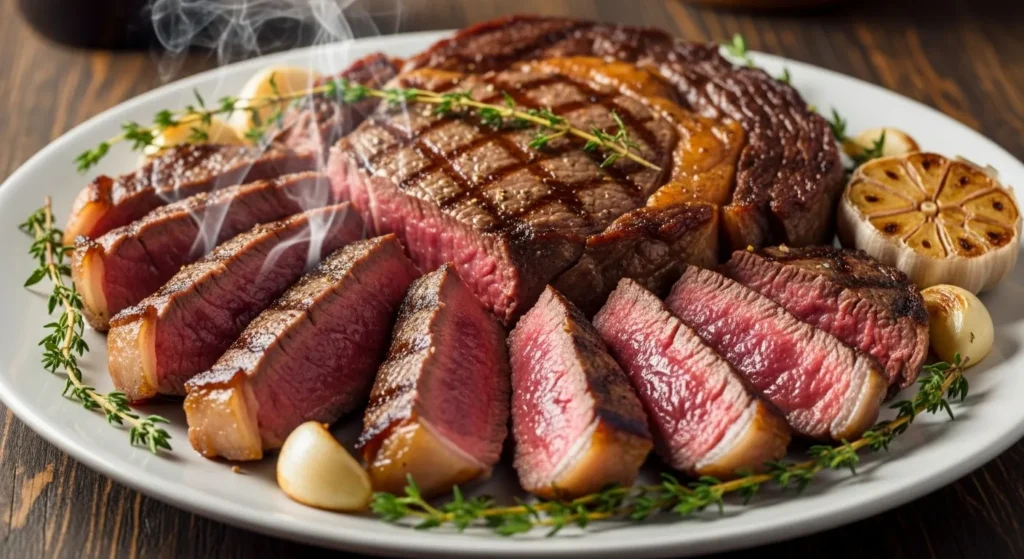
The Maillard reaction makes cooking better. Use it in your next meal. You will taste the difference.