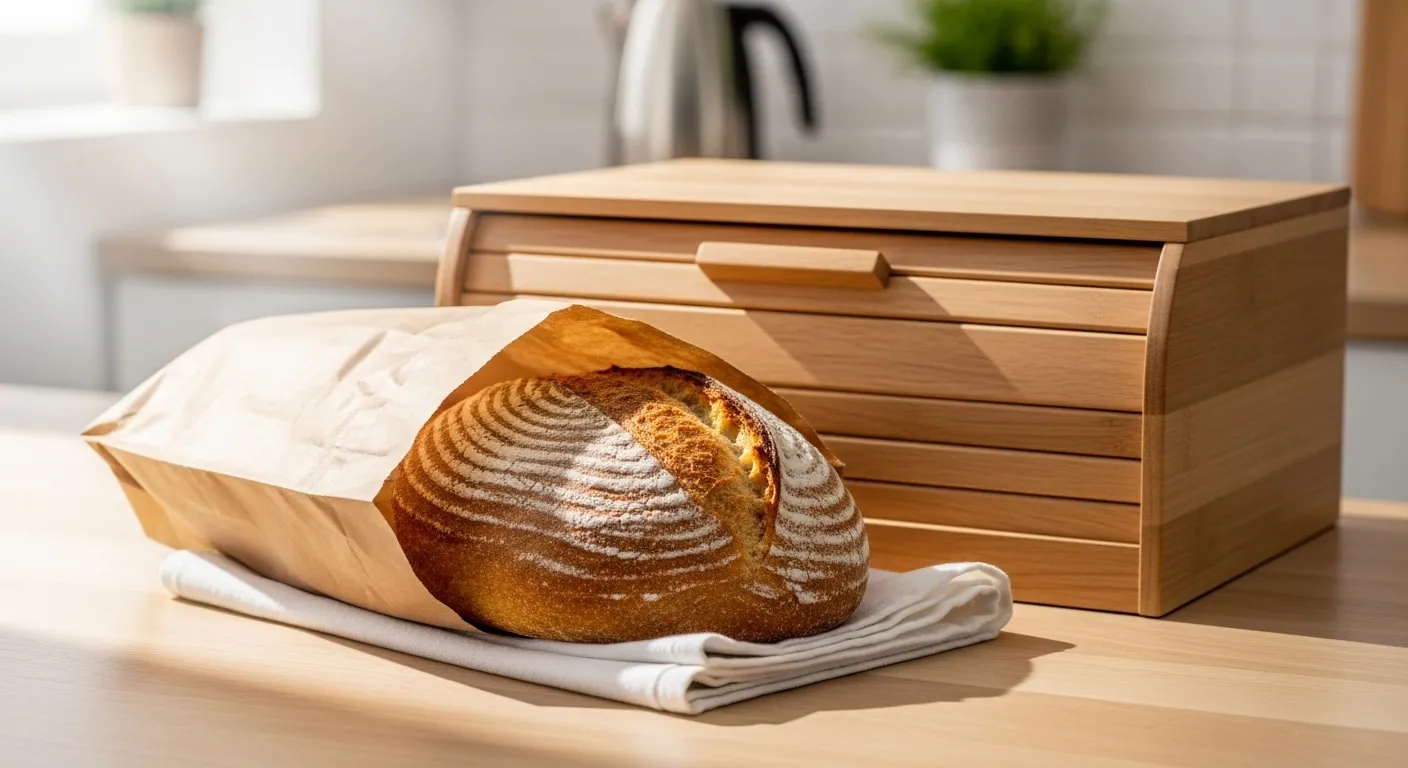
Why Proper Bread Storage Matters
Bread stales due to moisture loss and starch retrogradation, where starch molecules crystallize and harden. Mold can also creep in if bread is stored in humid conditions. Storing bread correctly preserves its texture, flavor, and shelf life. Homemade bread, like the easy sourdough discard cinnamon rolls from TasteCraft, lacks preservatives, so it needs extra care to stay fresh.
Key Factors Affecting Bread Freshness
- Moisture: Too much moisture causes mold; too little leads to dryness.
- Temperature: Cold speeds up staling, while heat encourages mold.
- Air Exposure: Open air dries out bread quickly.
- Bread Type: Crusty artisan loaves and soft sandwich breads require different methods.
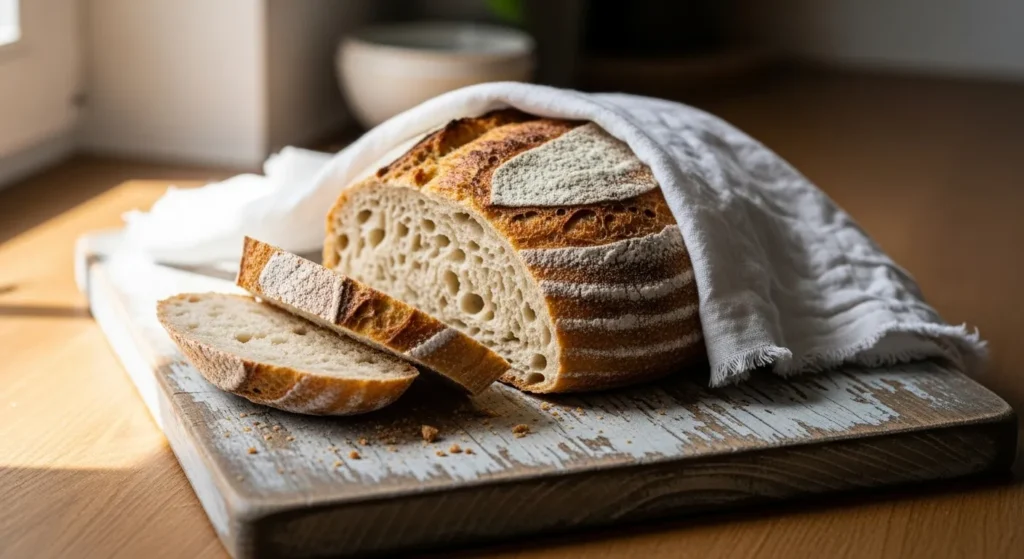
Best Ways to Store Bread at Room Temperature
For bread you’ll eat within 2-3 days, room temperature is ideal. Here’s how to do it right:
1. Use a Paper Bag for Crusty Breads
Crusty breads like baguettes or sourdough need to breathe. A paper bag keeps the crust crisp while preventing mold.
- How to Do It: Place the loaf in a paper bag, fold the top, and store in a cool, dry spot away from sunlight or heat sources like ovens.
- Tip: For extra protection, place the paper bag in a bread box to shield it from air and pests.
- Best For: Artisan breads, baguettes, or homemade sourdough.
2. Wrap Soft Breads in Plastic
Soft breads like sandwich loaves or homemade dinner rolls stay moist in plastic wrap or a zip-top bag.
- How to Do It: Wrap tightly to trap moisture, but check daily for mold in humid climates.
- Tip: Squeeze out excess air from the bag to reduce moisture buildup.
- Best For: Sandwich bread, brioche, or enriched breads.
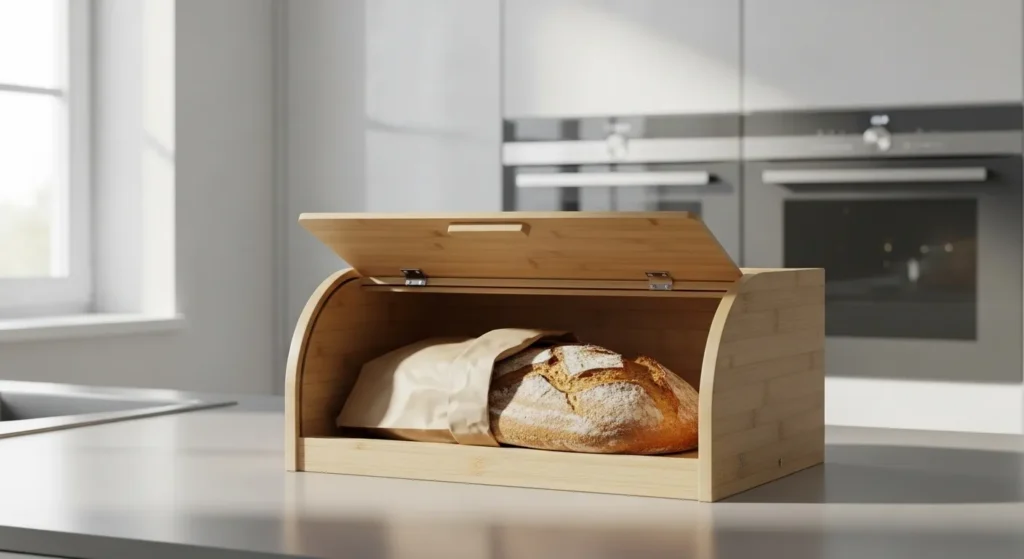
3. Try a Bread Box
A bread box balances airflow and moisture, keeping bread fresh for 3-4 days.
- How to Do It: Wrap crusty bread in a paper bag or cloth before placing it in the box. Soft breads can go in their plastic packaging.
- Tip: Add a small piece of apple or potato to maintain humidity for crusty loaves.
- Best For: All bread types, especially if you bake often.
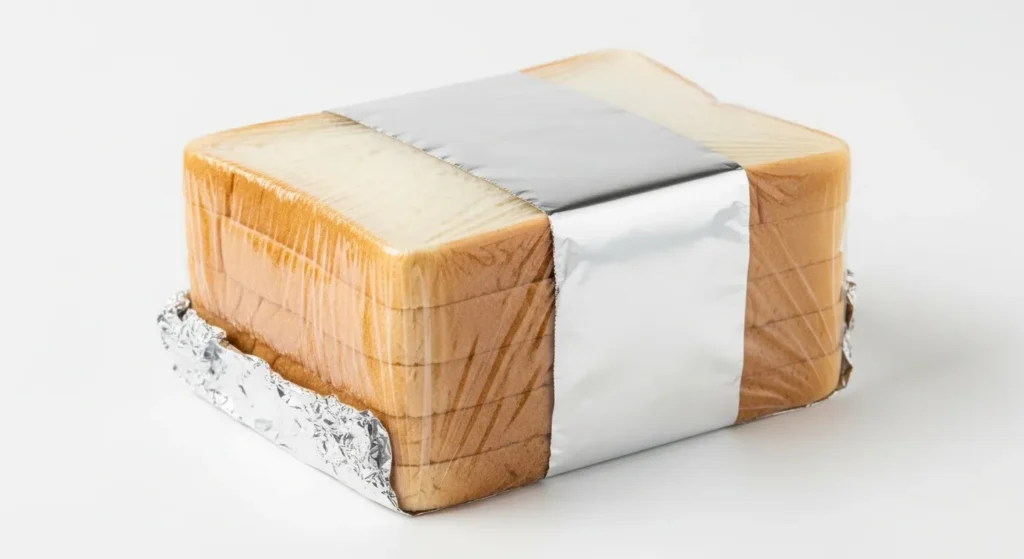
Freezing Bread for Long-Term Storage
Freezing is the best way to keep bread fresh for weeks or months. It stops staling and mold growth.
How to Freeze Bread
- Cool Completely: Let bread cool fully to avoid condensation.
- Wrap Tightly: Use plastic wrap, then aluminum foil, or place in a freezer-safe zip-top bag.
- Slice Before Freezing: Pre-slice sandwich bread for easy thawing.
- Label and Date: Mark the bag with the date to use within 3 months.
- Thaw Properly: Defrost at room temperature or toast directly from frozen.
Why You Should Avoid the Fridge
Refrigeration speeds up staling because cold temperatures cause starch to crystallize faster. Only use the fridge for store-bought bread with preservatives or in very humid climates to prevent mold.
For more on why fridges harm bread, check out Serious Eats’ guide.
Reviving Stale Bread
If your bread goes stale, don’t toss it! Try these tricks:
- Reheat Crusty Bread: Sprinkle with water and bake at 300°F for 10-15 minutes.
- Toast Soft Bread: Pop slices in a toaster to restore texture.
- Make Croutons: Cube stale bread, toss with olive oil, and bake for homemade croutons.
Storage Tips for Specific Breads
- Sourdough: Store in a paper bag or bread box for 3-4 days. Freeze for longer storage. Try our easy sourdough discard cinnamon rolls for a fun way to use leftovers.
- Sandwich Bread: Keep in plastic at room temperature for 2-3 days or freeze.
- Baguettes: Use a paper bag and eat within 24 hours for best crust.
- Enriched Breads: Wrap tightly in plastic to retain moisture, like for homemade mac and cheese toppings.
Substitution Ideas
- No Bread Box? Use a large, lidded pot or a clean pillowcase to mimic a bread box.
- No Plastic Wrap? Use beeswax wraps for an eco-friendly option.
- No Freezer Space? Store in a cool pantry with a linen bag to slow staling.
Make-Ahead and Storage Tips
- Pre-Slice: Slice sandwich bread before freezing for quick use.
- Batch Freeze: Bake multiple loaves and freeze extras for later.
- Store Cut Side Down: Place crusty bread cut side down on a board to protect the crumb.
Serving Suggestions
- Fresh Bread: Enjoy with butter or as a base for sheet-pan chicken fajitas.
- Stale Bread: Use for croutons in salads or as a thickener for creamy mushroom risotto.
- Toasted Slices: Pair with vegan avocado chocolate mousse for a sweet-savory treat.
Conclusion
Storing bread doesn’t have to be a mystery. Use paper bags or bread boxes for crusty loaves, plastic for soft breads, and the freezer for long-term storage. Avoid the fridge unless mold is a concern. With these tips, your bread will stay fresh and delicious, whether it’s a homemade sourdough or a store-bought loaf. Got extra bread? Try making no-bake cheesecake in a jar with crumbled bread for a creative twist!