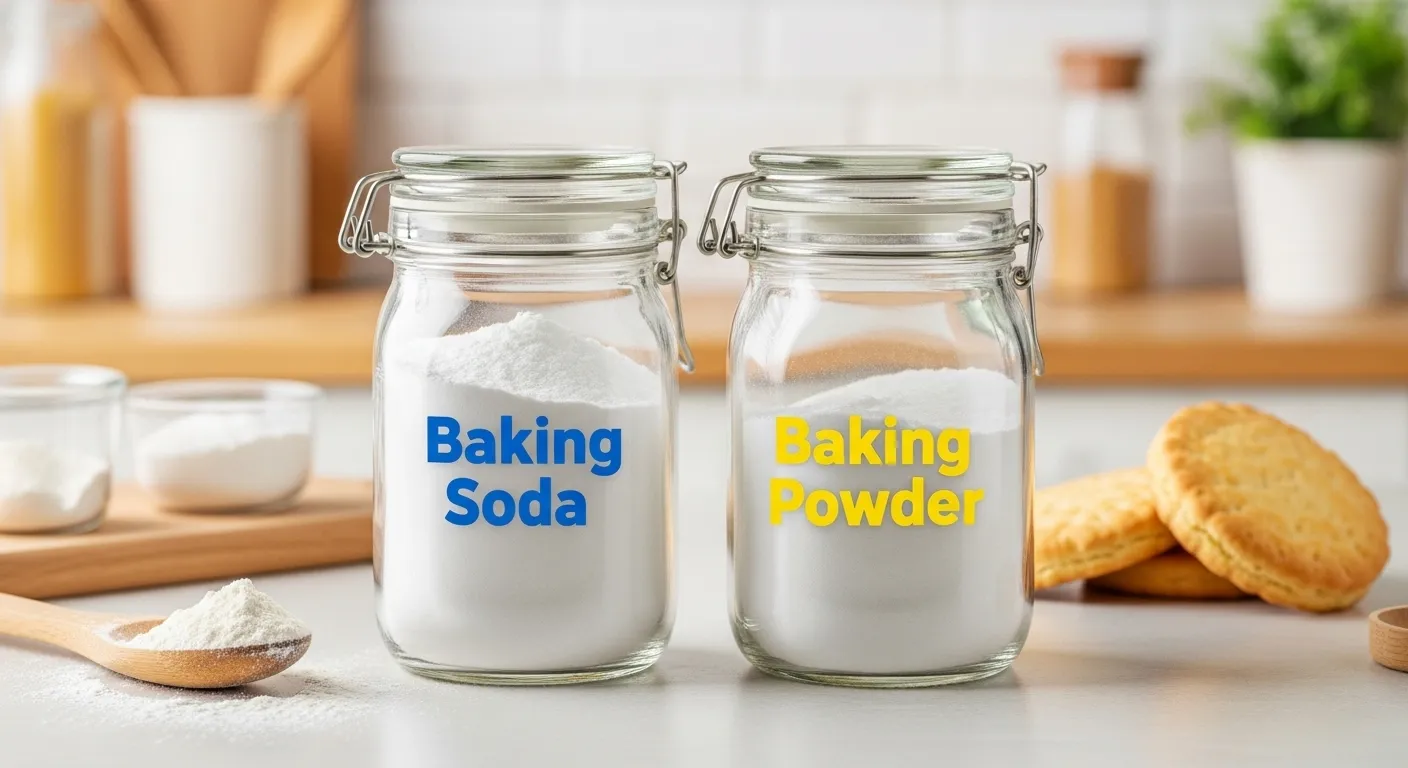
Baking soda and baking powder both help baked goods rise. They act as leavening agents by creating carbon dioxide gas. The main difference? Baking soda is pure sodium bicarbonate and needs an acid to work. Baking powder mixes baking soda with an acid and a filler, so it works on its own with liquid and heat. Use baking soda in recipes with buttermilk or yogurt. Use baking powder in neutral batters like plain cakes. Wrong choice leads to flat or bitter results. Baking soda is three times stronger, so measure carefully.
I once grabbed the wrong one for my favorite chocolate chip cookies. The batch spread too much and tasted off. That mix-up taught me to check labels every time. Now, I keep both in my pantry and test them in simple recipes.
What Is Baking Soda?
Baking soda, or sodium bicarbonate, is a white powder. It is a base with a high pH. When mixed with an acid like vinegar or lemon juice, it releases carbon dioxide bubbles right away. These bubbles make dough or batter expand.
In baking, it also helps with browning and tender texture. Think of it in banana bread with yogurt or cookies with cocoa powder. It reacts fast, so bake soon after mixing.
- Pure form: 100% sodium bicarbonate.
- Needs acid: From ingredients like sour cream or fruit.
- Strength: Needs about 1/4 teaspoon per cup of flour.
For more on browning in cookies, check our 25-minute soft chewy chocolate chip cookies recipe.
What Is Baking Powder?
Baking powder combines baking soda, a dry acid like cream of tartar, and cornstarch to absorb moisture. Most types are double-acting. They release gas in two steps: first with liquid, then with oven heat.
This makes it great for fluffy results in pancakes or muffins without added acids. It stays stable longer in batter.
- Mix of parts: Baking soda (25-30%), acid (25-30%), cornstarch (rest).
- Self-contained: No extra acid needed.
- Strength: Use 1 teaspoon per cup of flour.
See it in action with our quick fluffy pancake recipe.
Key Differences Between Baking Soda and Baking Powder
Here is a quick comparison:
| Feature | Baking Soda | Baking Powder |
|---|---|---|
| Composition | Pure sodium bicarbonate | Baking soda + dry acid + cornstarch |
| Activation | Needs moist and acid | Needs moist, then heat (double-acting) |
| Reaction Speed | Immediate | Two stages: mix and bake |
| Strength | 3-4 times stronger | Milder |
| Best For | Acidic recipes (e.g., buttermilk biscuits) | Neutral recipes (e.g., sugar cookies) |
| Taste Effect | Can taste soapy if too much | Neutral, no off flavors |
| Shelf Life | 2-3 years if dry | 6-18 months, loses power faster |
Baking soda promotes spread and color. Baking powder focuses on lift. Both expire, so test: Add vinegar to baking soda for fizz. Add hot water to baking powder for bubbles.
Common questions: Can you swap them? Yes, but adjust. For 1 teaspoon baking powder, use 1/4 teaspoon baking soda plus 1/2 teaspoon cream of tartar or lemon juice. Reverse is harder since baking soda is stronger.
People often ask: “Why use both in one recipe?” It balances lift and neutralizes extra acid for even texture. Like in our easy fudgy brownies from scratch, where cocoa needs baking soda but powder adds extra rise.
Related searches include how they affect cookies or cakes. Baking soda helps cookies spread for chewy centers. Baking powder keeps cakes tall and light.
When to Use Baking Soda or Baking Powder
Choose based on your recipe’s ingredients.
Use baking soda if:
- You have acidic items like buttermilk, yogurt, or molasses.
- You want browning, like in gingerbread.
- The recipe calls for it to tenderize.
Use baking powder if:
- No acids in the batter, like in white cake.
- You need steady rise during baking.
- For quick breads or scones.
Some recipes mix both. Baking soda handles acid, baking powder adds more bubbles. Test in small batches to see rise differences.
For acid-based ideas, try our best homemade apple pie recipe with its tangy filling.
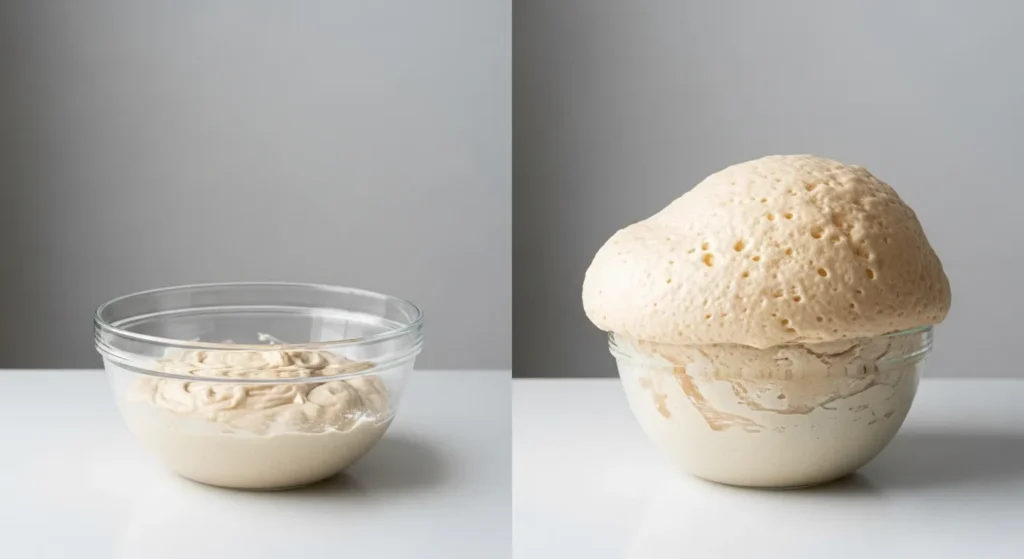
Simple Test Recipe: Fluffy Drop Biscuits with Baking Powder
This easy recipe uses baking powder to show quick lift. Prep time: 10 minutes. Bake time: 10 minutes. Total time: 20 minutes. Servings: 8 biscuits.
Ingredients
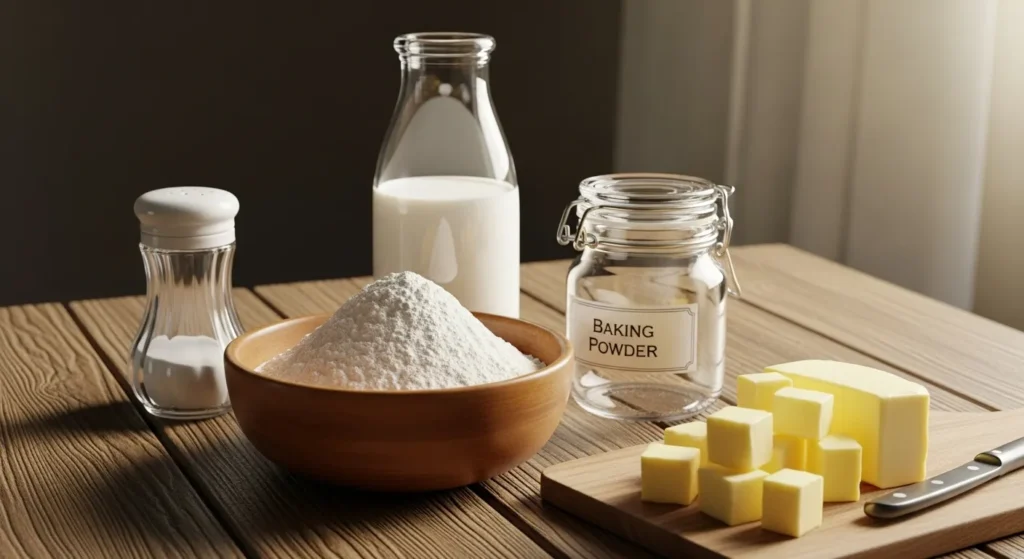
- 2 cups all-purpose flour
- 1 tablespoon baking powder
- 1 teaspoon salt
- 1/3 cup cold unsalted butter, cubed
- 3/4 cup whole milk
Instructions
- Heat oven to 425°F. Line a baking sheet with parchment paper.
- In a bowl, whisk flour, baking powder, and salt.
- Cut in butter with a fork or fingers until crumbly, like peas.
- Stir in milk just until dough forms. Do not overmix.
- Drop 8 mounds onto the sheet, about 1/4 cup each.
- Bake 10-12 minutes until golden. Cool 5 minutes.
These come out tender and high thanks to baking powder’s double action.
Substitution Ideas
No baking powder? Mix 1/4 teaspoon baking soda with 1/2 teaspoon vinegar or lemon juice per teaspoon needed. Buttermilk instead of milk? Add 1/4 teaspoon baking soda to neutralize.
For vegan: Use plant milk and vegan butter.
Storage and Make-Ahead Tips
Store baked biscuits in an airtight container at room temperature for 2 days. Freeze dough balls for up to 1 month; bake from frozen, add 2 minutes time.
For powder or soda: Keep in cool, dry spot. Check date every 6 months.
See our best bread storage tips for freshness for more.
Serving Suggestions
Serve warm with butter and jam. Pair with soup or eggs. For breakfast, add cheese and herbs before baking.
Try with our fluffy scrambled eggs with cheese recipe.
Tips and Variations
To see baking soda’s effect, remake with 1/2 teaspoon baking soda and 1/2 cup buttermilk instead of milk and powder. It will brown more but may spread.
Add garlic powder for savory twists. For sweet, mix in sugar and bake at 400°F.
Freshness tip: If no fizz, toss and buy new. Wrong leavener? Your bake sinks or tastes bitter.
For more science, read why salt makes food taste better in our article.
This knowledge fixes common baking fails. Next time, your treats will rise just right.