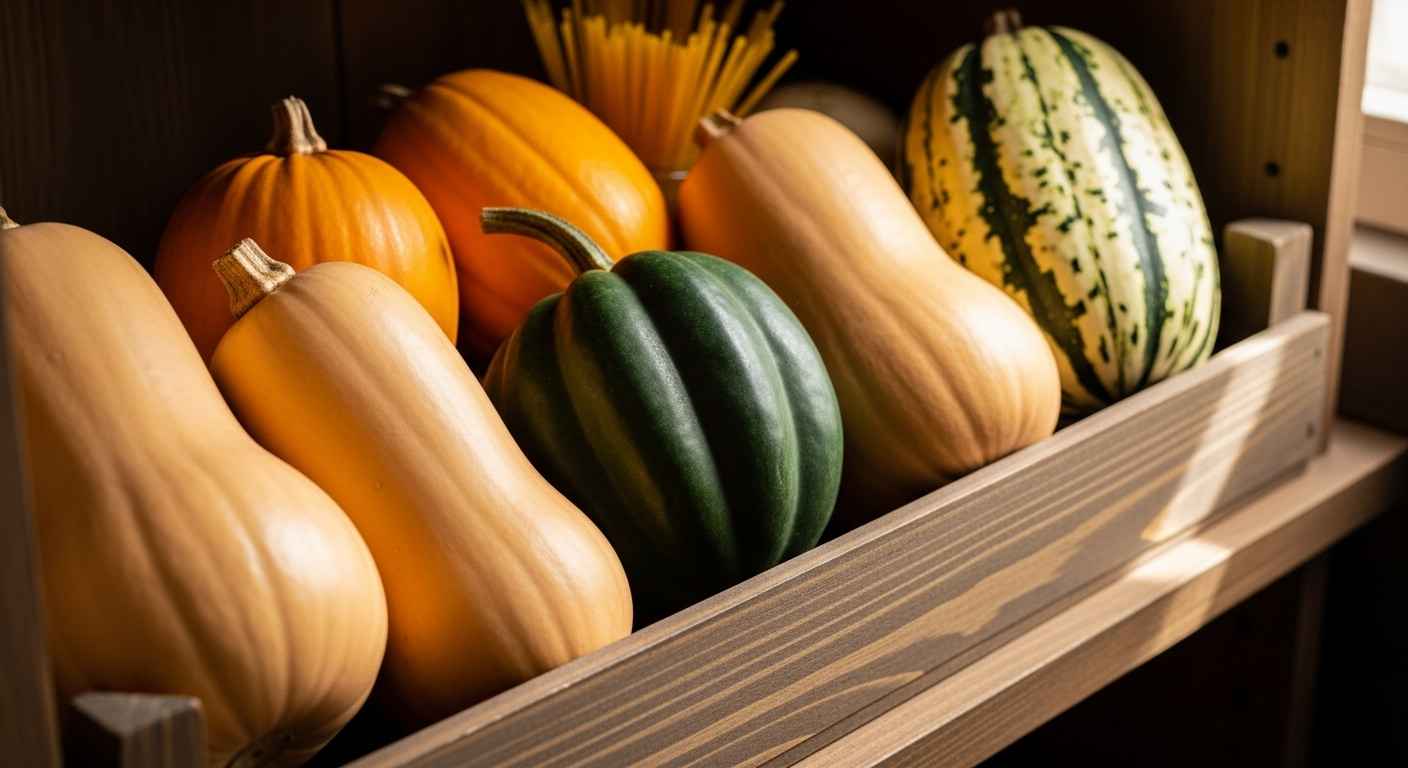
Winter squash lasts months when stored right. Harvest before frost. Cure most types for tough skins. Keep at 50 to 55 degrees Fahrenheit with low humidity. Check often to spot issues early.
I grew up helping my grand
ma in her small garden. One fall, she showed me her stash of butternut squash under the porch stairs. They stayed good until spring. That simple lesson stuck with me. Now, I store my own harvest the same way. You can too.
What You Need to Know First
Pick mature squash. Look for hard skins that resist a fingernail scratch. Stems should be dry and corky. Avoid any with cuts or soft spots.
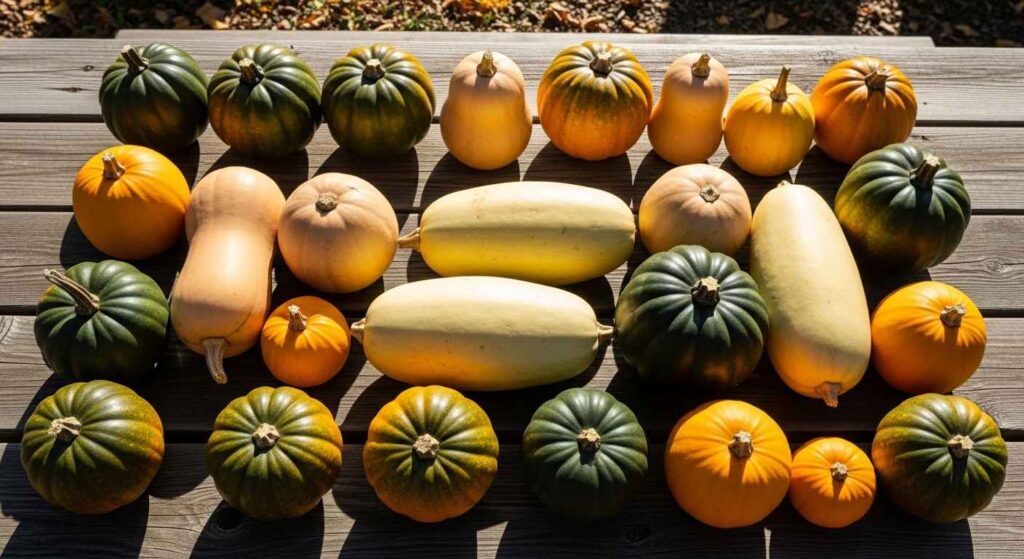
Different types store differently. Butternut lasts up to six months. Acorn holds for about one month. Spaghetti squash keeps four to five weeks. Hubbard can go six to seven months.
Prep time: 10 minutes
Curing time: 7 to 14 days
Total time: Up to 6 months storage
Yields: Depends on your harvest
Tools and Materials
- Garden pruners
- Vinegar (for cleaning)
- Water
- Newspaper or cloth
- Boxes or crates
- Thermometer (optional)
How to Harvest Winter Squash
Harvest sets up good storage. Do it right to avoid rot.
- Wait until vines start to die back.
- Check for full color and hard rind.
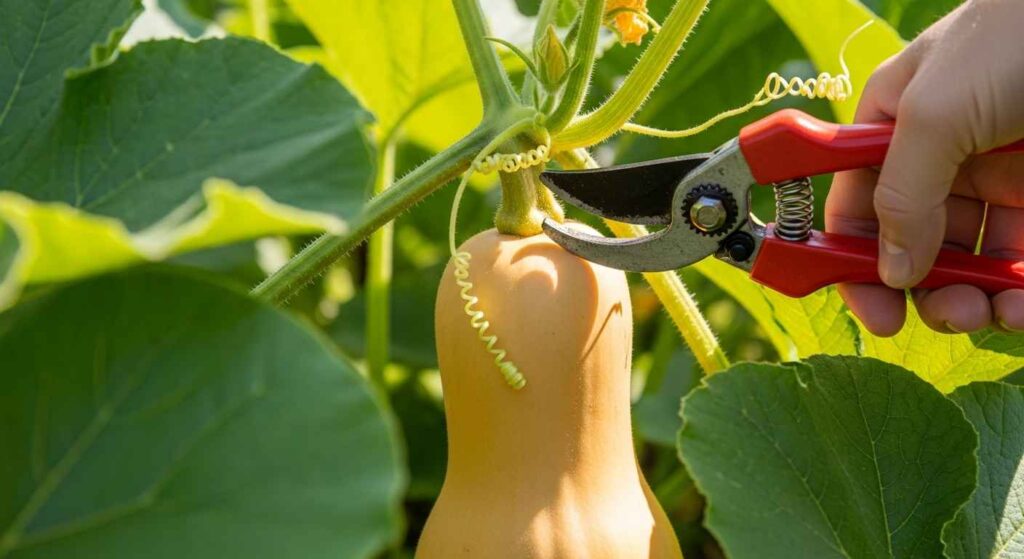
- Use pruners to cut squash from vine. Leave 2 to 3 inches of stem.
- Handle gently. Do not drop or bruise.
- Bring inside if frost is coming soon.
For more on keeping produce fresh, see our guide to storing vegetables.
Curing Winter Squash Step by Step
Curing hardens the skin. It slows rot and boosts sweetness. Skip for acorn squash.
- Place squash in a single layer. Use a sunny spot outdoors or indoors near a window.
- Keep at 80 to 85 degrees Fahrenheit if possible.
- Rotate squash every few days for even exposure.
- Cure for 7 to 10 days. Test skin with your thumbnail. It should not dent easily.
- Wipe squash with a mix of one part vinegar to four parts water. This kills mold spores.
If weather is wet, cure inside with a fan for air flow.
Best Ways to Store Winter Squash
Store in a cool, dry spot. Good air flow prevents mold.
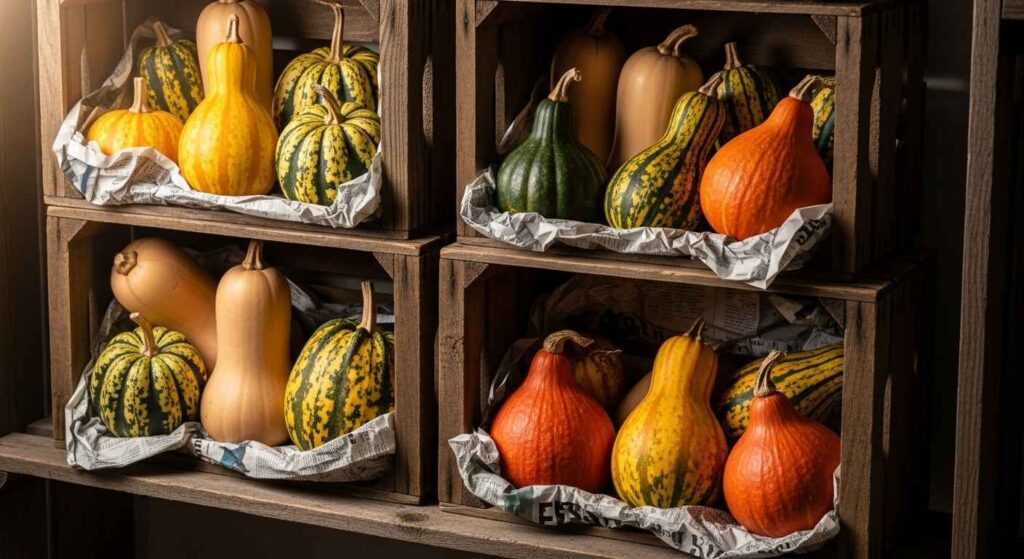
- Wrap each squash in newspaper. This absorbs extra moisture.
- Place in open crates or on shelves. Do not let them touch.
- Aim for 50 to 55 degrees Fahrenheit. Humidity should be 50 to 70 percent.
- Avoid spots near apples or pears. Their gas speeds up rot.
- Check weekly. Use any with soft spots right away.
A basement shelf or closet works well. In small homes, try under a bed.
Link to our bread storage tips for more dry storage ideas.
For variety details, check Johnny’s Selected Seeds chart.
Tips and Variations
Turn squash every two weeks to avoid flat spots. If humidity is high, add a dehumidifier.
For small spaces, use milk crates stacked with space between.
Varieties like delicata store shorter. Eat them first.
If rot starts, cut away bad parts and cook the rest soon.
Substitution Ideas
No vinegar? Use a mild bleach mix: one teaspoon per gallon of water.
Can’t cure outside? Use a warm room with lights on for heat.
For short-term, refrigerate cut squash in airtight bags. It lasts three to five days.
Make-Ahead and Storage Tips
Cure a big batch at once. Stored squash is ready to use anytime.
Freeze cooked squash for longer keep. Peel, cube, and blanch first. It holds up to three months.
See our how to freeze cooked rice for similar freezing steps.
Serving Suggestions
Roast stored squash with herbs. It pairs well with chicken or pasta.
Try it in soups or mashed as a side.
For recipes, check our easy slow cooker beef stew or add to creamy mushroom risotto.
Stored squash brings garden taste to winter meals.