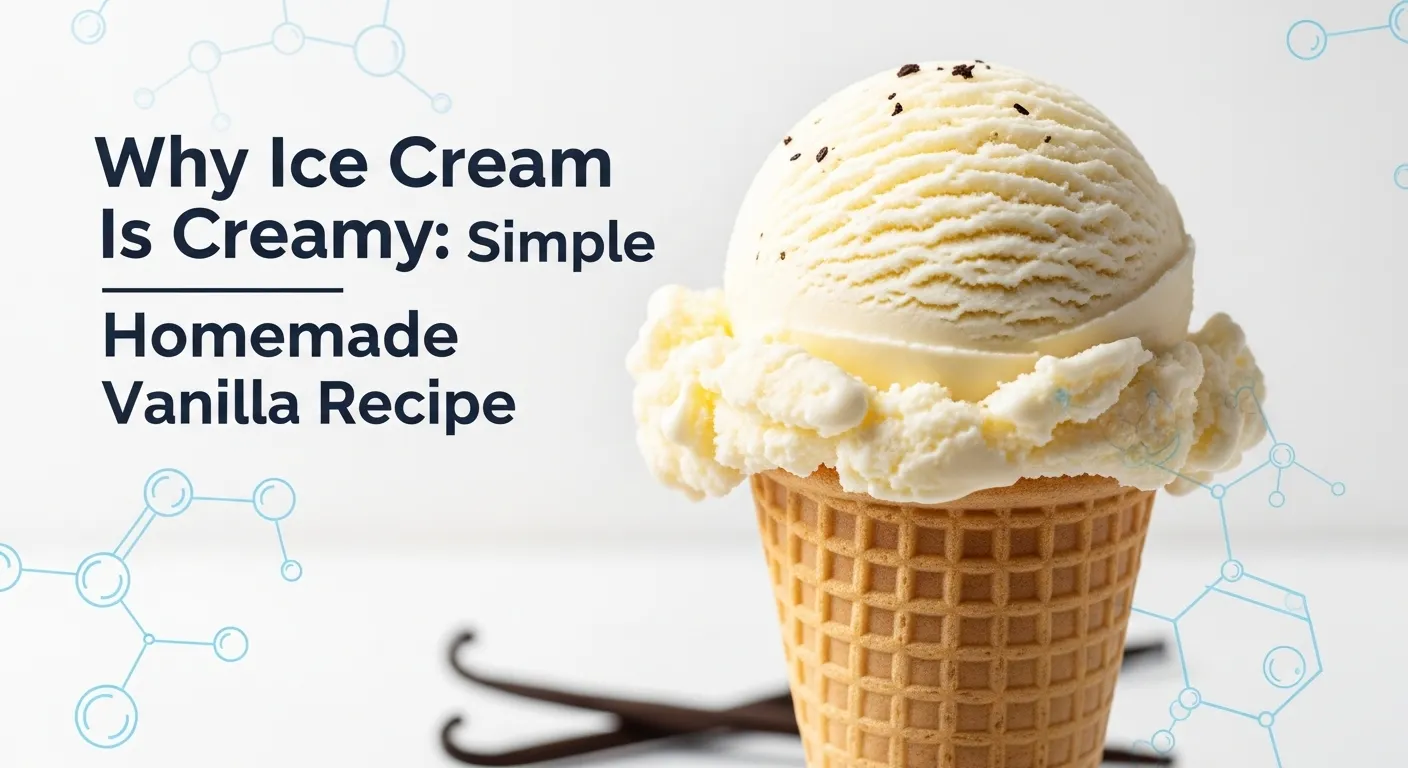
Ice cream turns creamy from small ice crystals, fat, air, and emulsifiers. Small crystals stop icy feel. Fat adds rich taste. Air makes it light. Emulsifiers mix fat and water. This guide explains the science. It also shares an easy recipe for creamy vanilla ice cream at home.
I recall my first try at homemade ice cream as a kid. We used an old hand-crank machine on the porch. The result was icy, not smooth. That sparked my curiosity about what makes it creamy. Years later, I learned the basics. Now, I make batches that rival store-bought.
The Science of Creamy Ice Cream
Creamy ice cream comes from a mix of ingredients and steps. Fat, water, sugar, and air work together. The process controls how they blend.
Role of Fat in Texture
Fat from cream or milk gives ice cream its smooth mouthfeel. It coats the tongue for a rich taste. Higher fat means more creaminess. Most recipes use heavy cream for this reason. Fat also traps air bubbles.
- Fat levels: Premium ice cream has 14-18% fat.
- Low-fat versions feel less smooth.
How Ice Crystals Affect Smoothness
Ice crystals form when water in the mix freezes. Large crystals make ice cream grainy. Small ones keep it creamy. Quick freezing creates tiny crystals.
- Nucleation: First tiny ice bits form.
- Growth: They get bigger if not controlled.
- Control: Churn fast to break them up.
Air and Overrun for Light Feel
Air gets whipped in during churning. This is called overrun. It makes ice cream fluffy. Too much air feels cheap. Right amount adds creaminess.
- Overrun range: 30-50% in good ice cream.
- No air: It would be a hard block.
Emulsifiers and Stabilizers
Emulsifiers like egg yolks mix fat and water. They stop separation. Stabilizers like guar gum hold water. This prevents big crystals.
- Common emulsifiers: Lecithin from eggs.
- Stabilizers: Keep texture even after freezing.
Sugar’s Part in Freezing
Sugar lowers the freezing point. Ice cream stays soft enough to scoop. Without it, the mix freezes hard.
Common Questions About Ice Cream Creaminess
People often ask why homemade ice cream turns icy. Slow freezing causes big crystals. Use an ice cream maker for better results.
Other questions:
- Why is gelato creamier? It has less air and slower churn.
- How to fix icy ice cream? Thaw a bit and rechurn.
- What ingredients help? Add more cream or corn syrup.
Related topics: Icy homemade fixes, soft serve science, fat in recipes.
Easy Homemade Creamy Vanilla Ice Cream Recipe
Make this at home. No fancy tools needed beyond an ice cream maker.
Prep Time: 15 minutes Cook Time: 0 minutes (churn time 20-25 minutes) Total Time: 40 minutes plus freezing Servings: 8 (about 1 quart)
Ingredients
- 2 cups heavy cream
- 1 cup whole milk
- 3/4 cup granulated sugar
- 1 tablespoon vanilla extract
- Pinch of salt
- 4 egg yolks (optional for custard base)
Instructions
- Mix sugar and salt in a bowl. Add milk. Stir until sugar dissolves.
- Pour in heavy cream and vanilla. Whisk well.
- If using egg yolks, beat them. Temper with warm milk mix. Cook over low heat until thick. Cool.
- Chill the mix in the fridge for 2 hours.
- Pour into ice cream maker. Churn for 20-25 minutes.
- Freeze for 2-4 hours to firm up.
Tips and Variations
Churn cold mix for small crystals. Add mix-ins like chocolate chips at the end.
Variations:
- Chocolate: Add 1/2 cup cocoa powder.
- Fruit: Swirl in strawberry puree.
- Nutty: Mix in chopped almonds.
Substitution Ideas
- Dairy-free: Use coconut cream instead of heavy cream.
- Lower sugar: Swap half with honey.
- No eggs: Skip for simpler base.
Storage and Make-Ahead Tips
Store in airtight container. Lasts 2 weeks in freezer. Soften at room temp for 5 minutes before scooping.
Make ahead: Prep base a day before churning.
Serving Suggestions
Scoop into bowls. Top with fresh berries. Pair with warm brownies from our easy fudgy brownies recipe. Or serve over apple pie from our best homemade apple pie recipe.
For more desserts, check our no-bake cheesecake in a jar.
For more on food science, see American Chemical Society’s page on ice cream