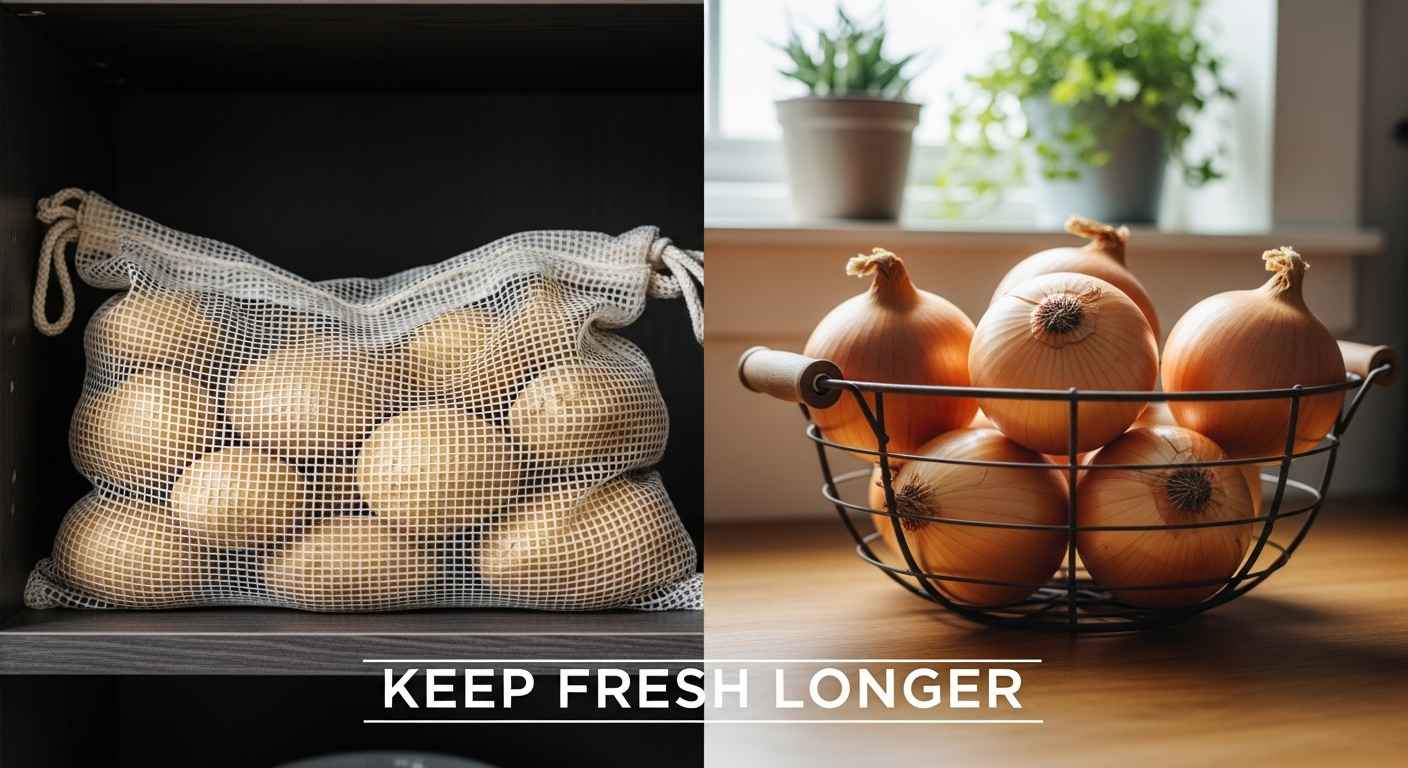
Storing potatoes and onions correctly keeps them fresh for weeks. Never store them together—onions release ethylene gas that makes potatoes sprout, and potatoes’ moisture causes onions to rot. Use cool, dry, dark spots and breathable containers like mesh bags or perforated boxes. This guide explains how to store them properly, avoid common mistakes, and even includes a quick recipe to use them.
I learned this the hard way. I once tossed a bag of potatoes and onions into the same kitchen drawer, excited for a hearty soup. A week later, the potatoes were sprouting, and the onions were mushy. I had to throw most of them out. Now, I store them separately, and they last much longer.
Why Separate Potatoes and Onions
Potatoes and onions need similar conditions but harm each other when stored together. Onions produce ethylene gas, which triggers sprouting in potatoes. Potatoes release moisture, making onions moldy. Keep them at least three feet apart to avoid waste.
- Ethylene gas: Onions release it, speeding up potato sprouting.
- Moisture: Potatoes give off water, causing onions to rot.
- Garlic note: Store garlic with onions, not potatoes.
How to Store Potatoes
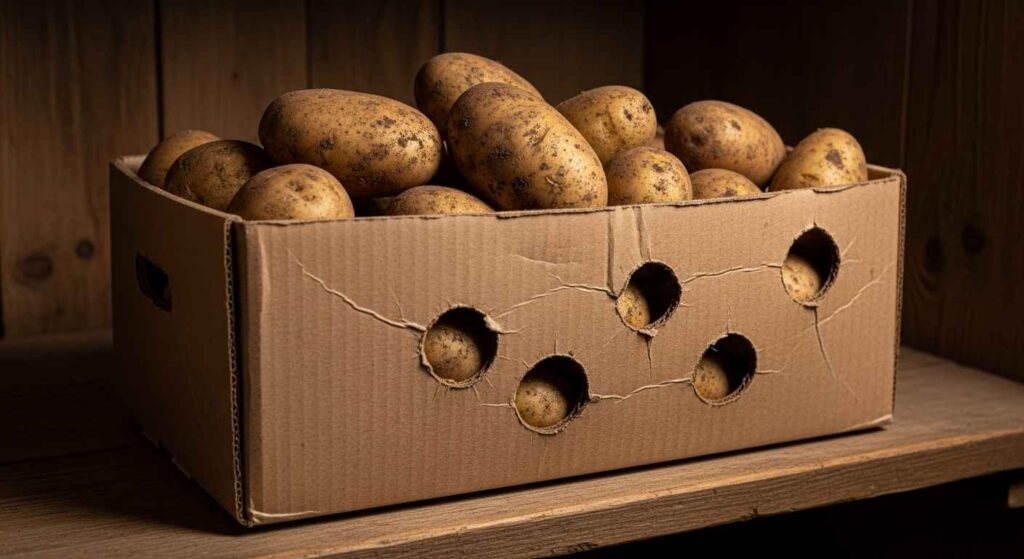
Keep potatoes in a cool, dark, dry place at 45–50°F. A pantry or basement works well. Avoid the refrigerator—cold turns potato starch into sugar, making them sweet and brown when cooked. Use breathable containers like mesh bags or cardboard boxes with holes. Plastic bags trap moisture and cause rot.
- Sort by type: Russets last longer than Yukon Golds.
- Check weekly: Remove sprouts or bad potatoes.
- Don’t wash: Brush off dirt to avoid moisture buildup.
Shelf life: Up to five months with proper storage.
How to Store Onions
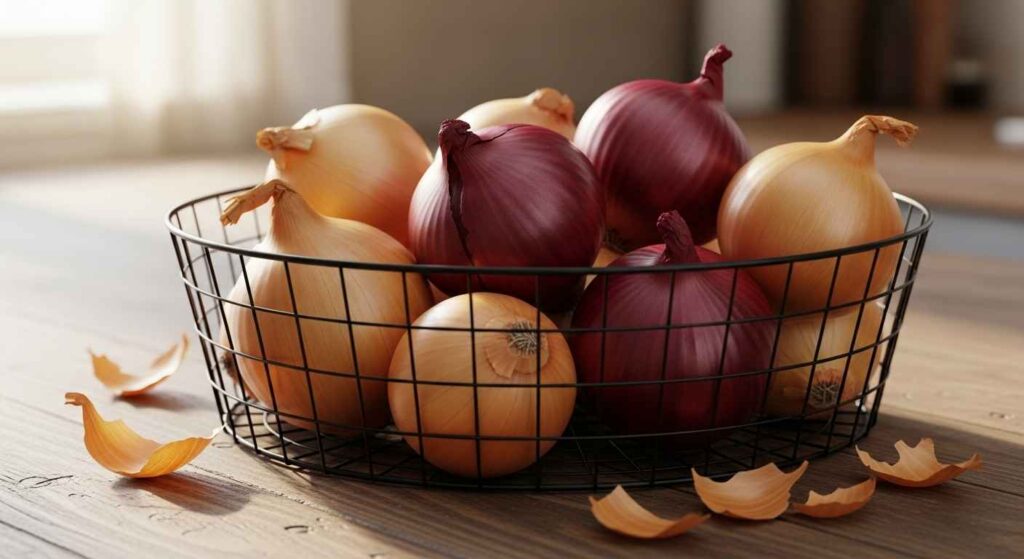
Store onions in a cool, dry, dark place at room temperature. A countertop or cabinet is ideal. Avoid the fridge—cold makes onions soft and wet. Use ventilated containers like paper bags, wire baskets, or mesh bags. Punch holes in bags if needed for airflow.
- Separate types: Keep red and yellow onions apart if preferred.
- Avoid sunlight ELE: Prevents sprouting.
- Store cut onions: Keep in the fridge for a few days.
Shelf life: Up to three months with good ventilation.
Common Mistakes to Avoid
Improper storage wastes food. Here’s what to skip:
- Don’t store potatoes and onions together.
- Avoid sealed plastic bags—they trap moisture.
- Keep away from apples or bananas, which also release ethylene gas.
- Monitor humidity: Too much causes mold; too little wrinkles them.
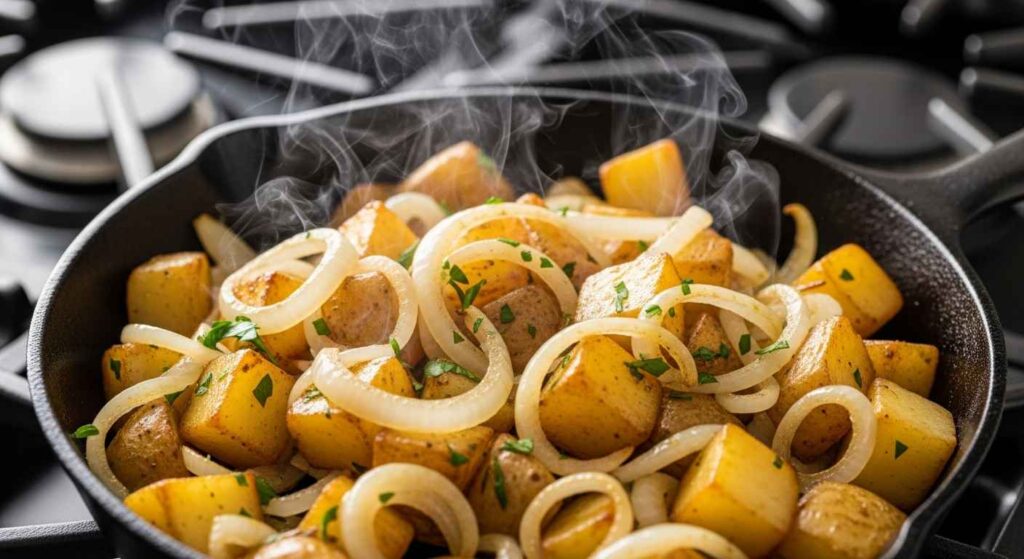
Bonus: Quick 20-Minute Potato and Onion Hash Recipe
Turn your stored potatoes and onions into a tasty side dish with this simple recipe.
Prep Time: 5 minutes
Cook Time: 15 minutes
Total Time: 20 minutes
Servings: 4
Ingredients
- 4 medium potatoes, diced
- 2 onions, chopped
- 2 tablespoons oil
- Salt to taste
- Pepper to taste
Instructions
- Heat oil in a pan over medium heat.
- Add diced potatoes and cook for 10 minutes, stirring often.
- Add chopped onions and cook for 5 more minutes until soft.
- Season with salt and pepper.
- Serve hot.
Want more potato recipes? Try our homemade hash browns or air fryer roasted potatoes.
Tips and Variations
Peel potatoes for a softer hash texture. Add minced garlic for extra flavor. Use sweet onions for a milder taste.
Substitution Ideas
- Swap oil with butter for richness.
- Use sweet potatoes instead of regular for a twist.
Storage or Make-Ahead Tips
Store leftover hash in an airtight container in the fridge for up to three days. Reheat in a pan for crispness. For make-ahead, dice potatoes and onions a day in advance and store separately in the fridge.
Serving Suggestions
Serve with fluffy scrambled eggs for breakfast. Add to make-ahead breakfast burritos. Pair with grilled meat for dinner.